Seal your home before scorpion season
Scorpions spend winter tucked inside walls and under debris. Seal the gaps in January, February or March, and fewer of them find their way inside when warm nights return.
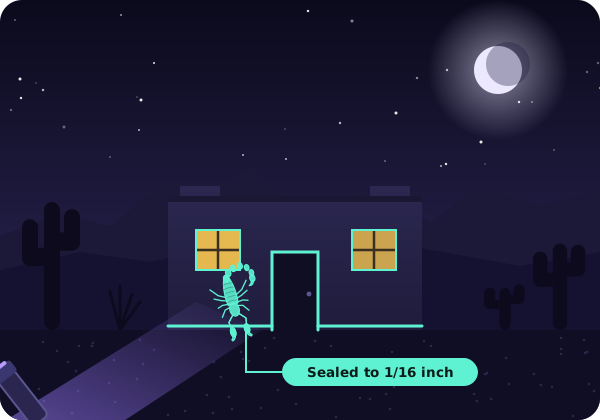
Why winter is the best time to seal
- Ahead of the season: scorpions get active on warm nights, roughly spring through fall
- Easier scheduling: sealing companies are busiest in summer, when everyone calls at once
- Cooler work: technicians can inspect the roofline, vents and weep screeds without 110° heat
What the inspection covers
A local company walks the outside of your home and checks the spots scorpions use to get in: door sweeps and the garage door seal, weep screeds at the base of stucco, pipe and A/C penetrations, vents and window screens. You get a quote for sealing, with no obligation to book it.
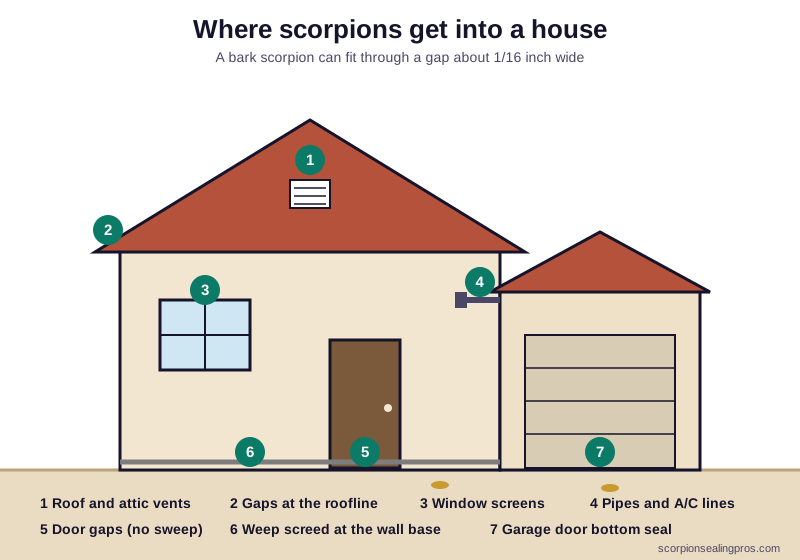
Want to know when scorpions start showing up in your area? Get a free season alert.
Book an early inspection
Pick a month. We'll pass your request to a local company, and they'll reach out to set a time. Free, no obligation.
✓ 1 local company, not 5 · ✓ Free · ✓ No obligation
Common questions
Do scorpions go away in winter?
No. They slow down and hide inside walls, under rocks and in debris. They come back out when nights warm up, so the gaps they use are still there.
How much does sealing cost?
Most local companies quote about $500 to $1,500 to seal an average home, depending on its size, age and how many gaps need work. See the cost estimator.
Is the inspection really free?
Yes. The company inspects and quotes at no cost, and you decide whether to book the work.